> For the complete documentation index, see [llms.txt](https://docs.wonderchat.io/llms.txt). Markdown versions of documentation pages are available by appending `.md` to page URLs; this page is available as [Markdown](https://docs.wonderchat.io/integration-guides/zendesk.md).
# Zendesk
Guide on How to Integrate Wonderchat with Zendesk.
Connect Wonderchat with Zendesk to send support handovers straight to your help desk.
You can also customize the Zendesk ticket subject with placeholders and map collected visitor data to Zendesk ticket fields.
***
## Step 1: Open the integrations page
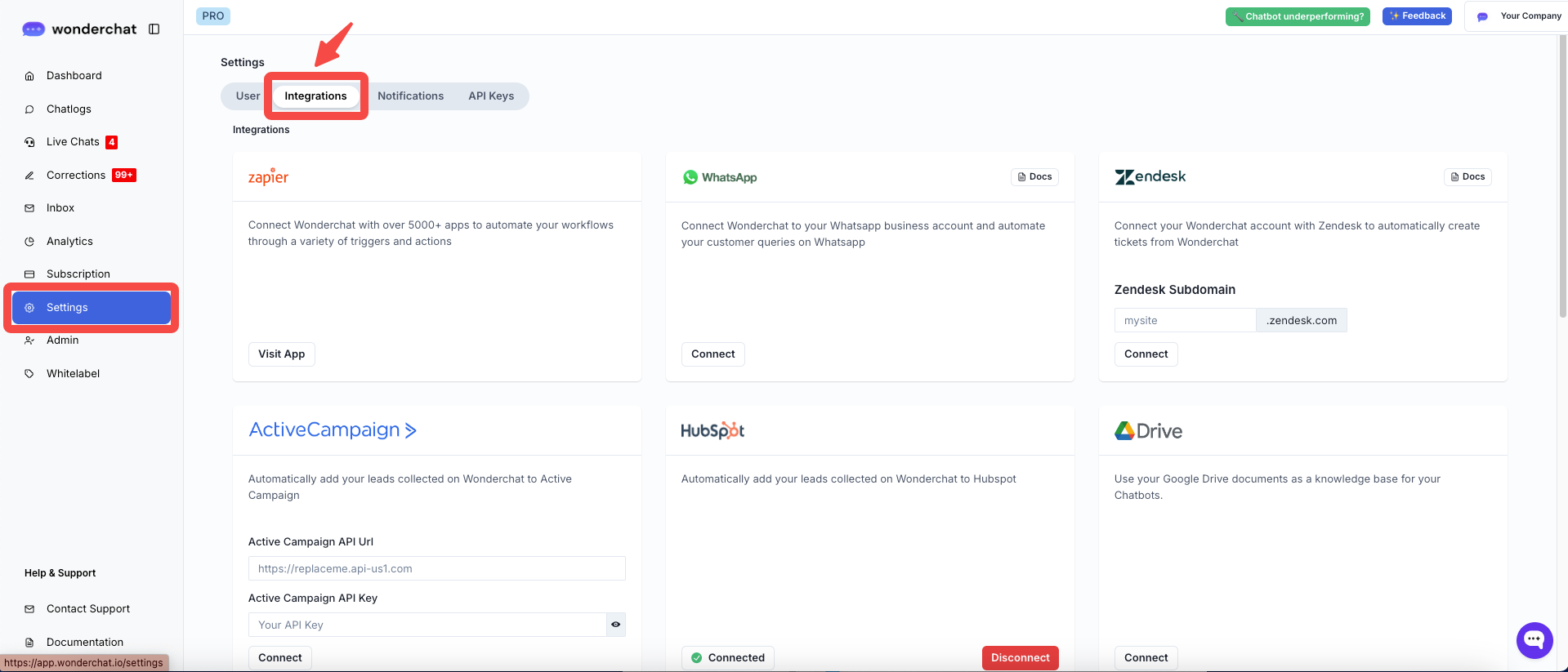
Go to **Settings** → **Integrations**.
Open Settings and go to Integrations.
## Step 2: Connect your Zendesk account
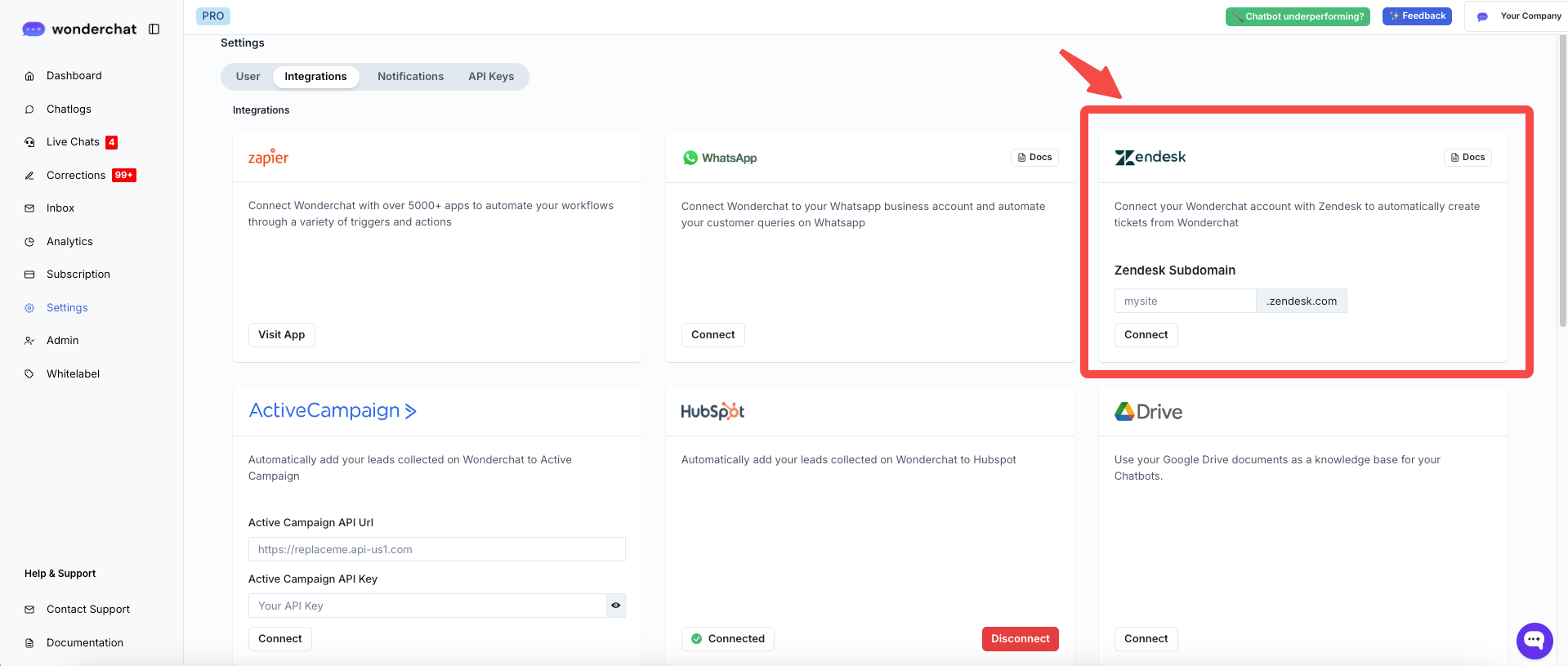
Under **Zendesk**, enter your subdomain and click **Connect**.
Enter your Zendesk subdomain and click Connect.
## Step 3: Authorize Zendesk
Approve the connection between Wonderchat and Zendesk.
## Step 4: Confirm the connection
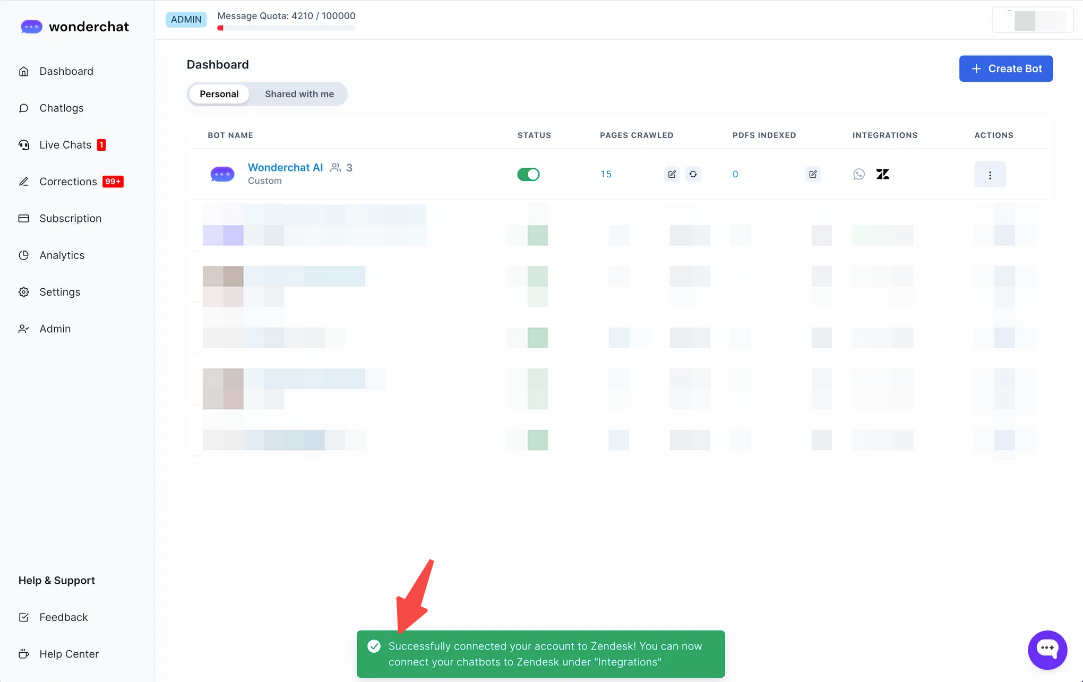
After the connection succeeds, Wonderchat shows a confirmation message.
Sample successful connection message.
## Step 5: Configure Zendesk ticket creation
Go back to your dashboard and open **Edit Chatbot**.
Open the **Tools** tab.
Search for **Zendesk** and enable ticket creation.
Once enabled, Wonderchat can create Zendesk tickets when the selected trigger runs.
### Customize the Zendesk ticket subject
Use **Zendesk Ticket Subject** to control how new tickets are named.
You can insert collected fields as placeholders. Use the field picker or type `{{field name}}`.
Examples:
* `Support request from {{name}}`
* `Billing issue from {{email}}`
* `Enterprise lead from {{company}}`
When Wonderchat creates the ticket, each placeholder is replaced with the visitor's collected value.
### Map collected visitor data to Zendesk fields
Use **Custom Field Mapping** to send collected visitor data into Zendesk custom ticket fields.
This is useful when you want values like name, email, phone number, or custom form answers to appear in specific Zendesk fields.
Keep these rules in mind:
* You can map any collected Wonderchat field to a matching Zendesk ticket field.
* Dropdown-type Zendesk fields expect the collected value to exactly match one of the field's option values.
* If your Zendesk fields are still loading, wait until the list finishes loading before adding mappings.
### Optional: Include the visitor's page URL
Enable **Include page URL in ticket** to add the page the visitor was on when the ticket was created.
## Step 6: Train your chatbot on Zendesk tickets and articles
Open **Edit Chatbot** → **Data Sources** → **Zendesk**.
Click **Sync** to pull in your Zendesk data.
For the full training flow, see [How to Train Your Chatbot Using Zendesk Tickets & Knowledge Base](/setup-guides/training-your-chatbot/how-to-train-your-chatbot-using-zendesk-tickets-and-knowledge-base.md).
## Step 7: Test the integration
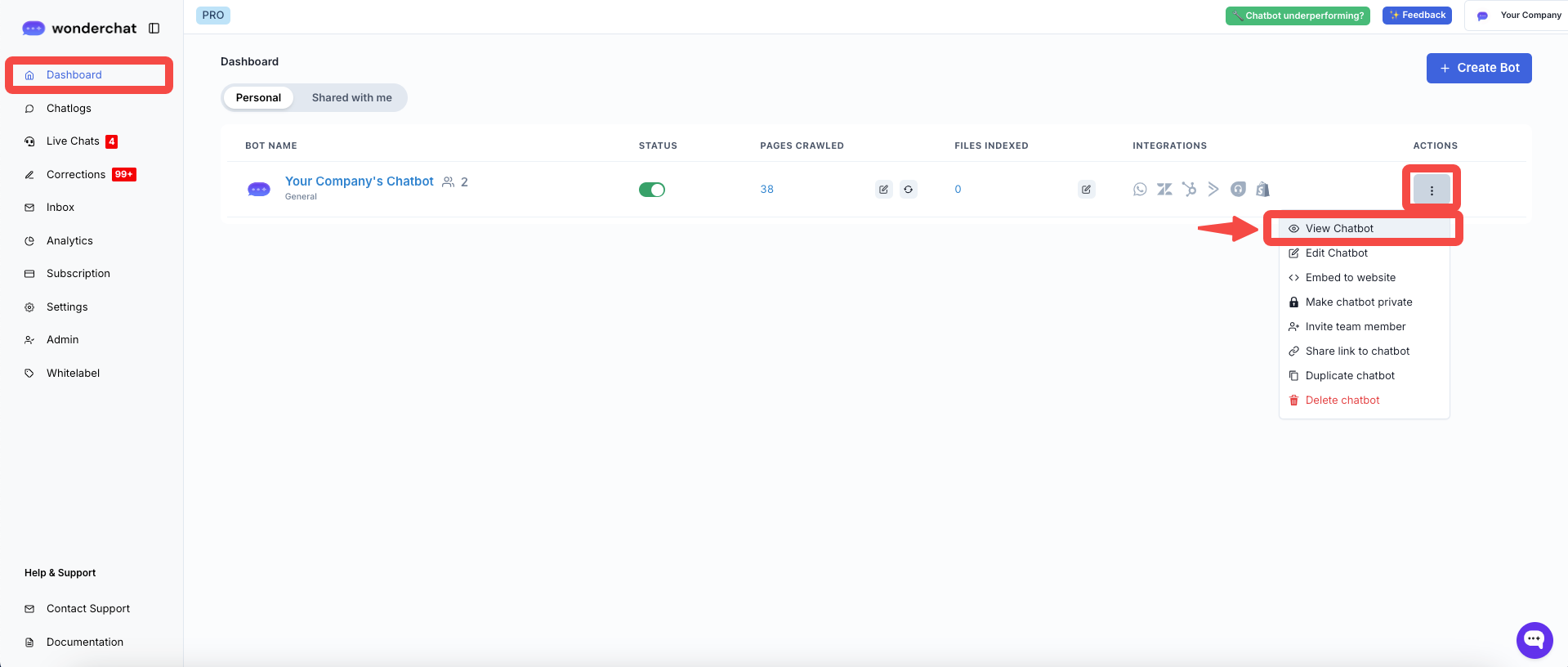
Go to **Dashboard** → **Actions** (⋮) → **View Chatbot**.
Click View Chatbot.
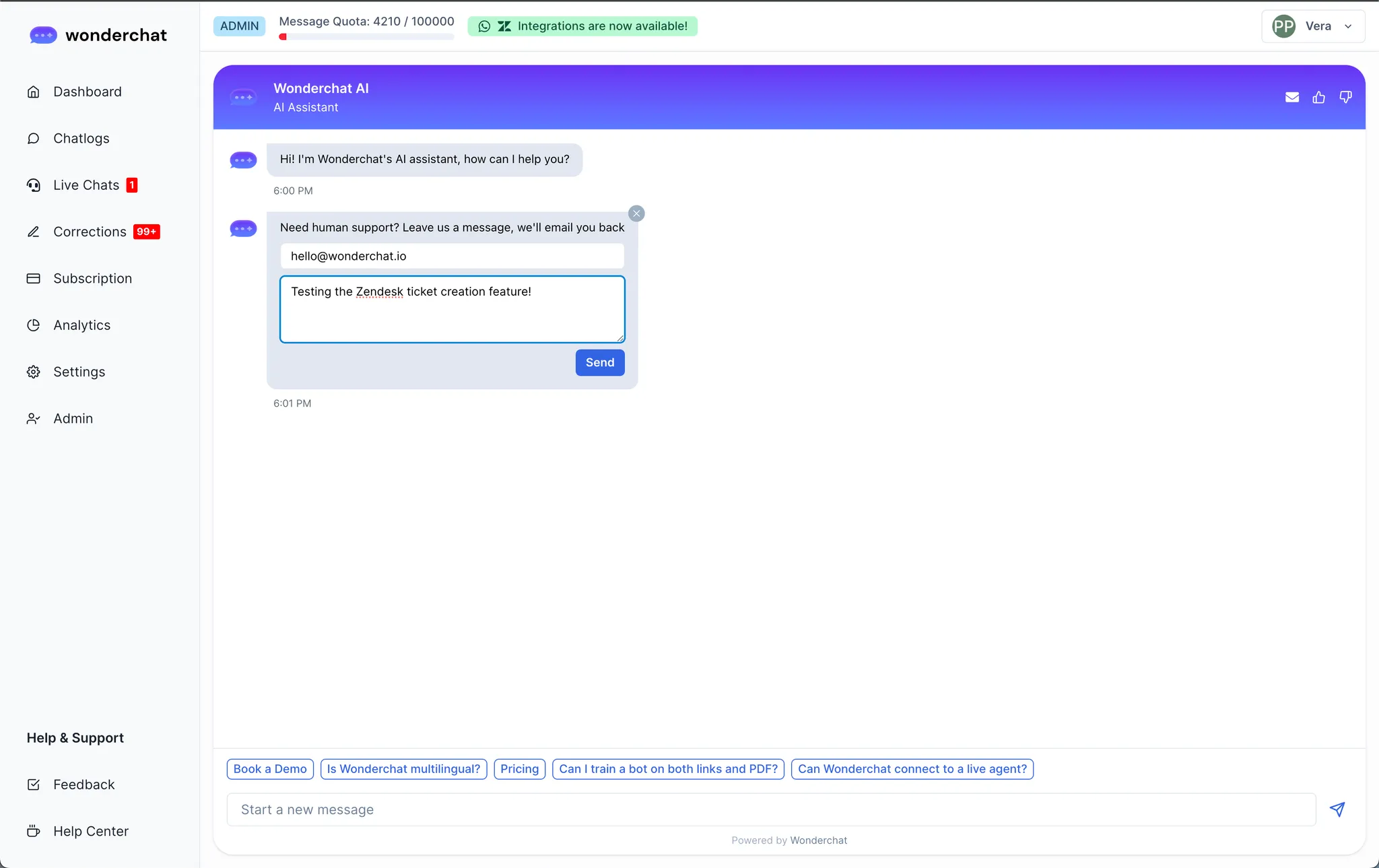
Submit a support request through the widget.
Submit a message through the chat widget.
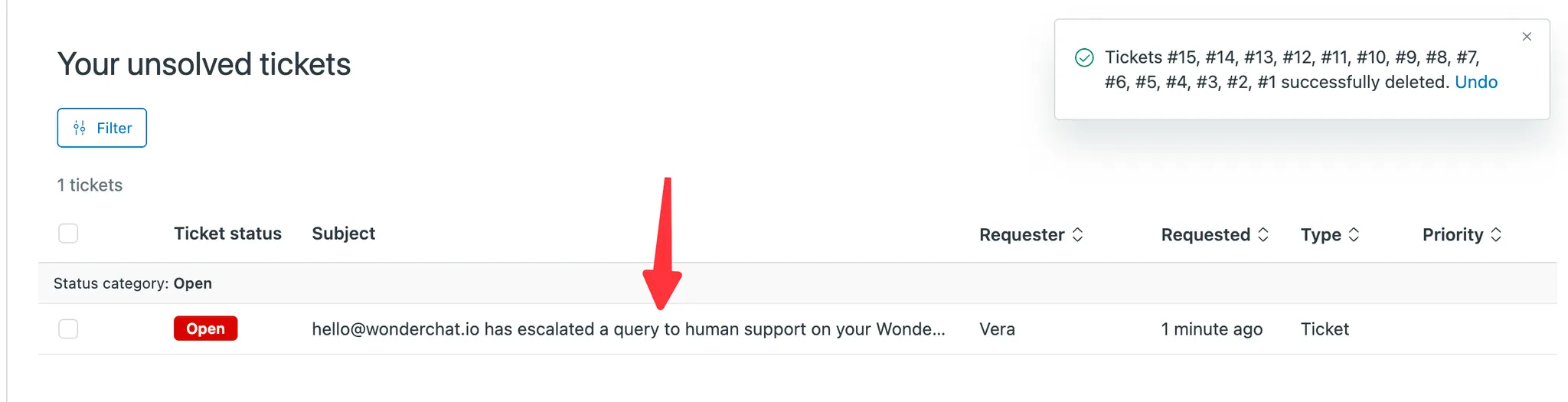
After the handover runs, you should see a new Zendesk ticket with the configured subject and any mapped field values.